Check the Position of the Helmet
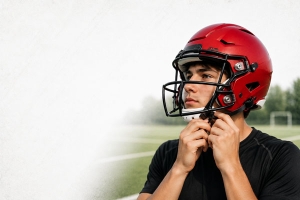
Once the helmet is on, it should sit squarely and securely on the player’s head. The helmet should not be tilted excessively forward, pushed too far back, or noticeably shifted to either side.
The front of the helmet should sit in the position specified by the manufacturer, generally above the eyebrows, while allowing the athlete a clear field of vision.
The helmet should also feel snug around the entire head. A secure fit does not mean the helmet should be painfully tight. Excessive pressure, pinching, or persistent discomfort may indicate that the size or internal adjustments need to be reevaluated.
A properly fitted football helmet should move with the player’s head rather than independently from it.
Test for Excessive Movement
A properly fitted football helmet should move with the player’s head rather than independently from it.
With the chin strap properly secured, gently move the helmet from side to side and front to back. There should not be excessive slipping or rotation. When the helmet is moved, the skin of the forehead should generally move with it rather than allowing the helmet to slide freely across the head.
Significant movement can be a sign that the helmet is too large or that its internal fit system needs adjustment.
Adjust the Internal Fit System
Modern football helmets may use different combinations of padding, liners, inflatable components, or other manufacturer-specific fitting systems. These components are designed to help the helmet conform properly to the player’s head.
Adjustments should always be made according to the helmet manufacturer’s instructions. Padding should not be removed, substituted, modified, or added simply to make an improperly sized helmet fit.
If the helmet cannot be adjusted to provide a secure and comfortable fit within the manufacturer’s guidelines, a different size or helmet model may be necessary.
Check the Chin Strap and Jaw Area
The chin strap is an important part of the helmet’s overall fit. It should be centered beneath the player’s chin and adjusted so that the helmet remains securely positioned during movement.
All attachment points should be properly connected, and the strap should fit securely without creating unnecessary discomfort. The jaw pads or other components around the sides of the face should also make appropriate contact according to the manufacturer’s fitting instructions.
After adjusting the chin strap, check the helmet again for movement. A helmet should not rely on an excessively tightened chin strap to compensate for an otherwise loose fit.
Recheck Helmet Fit Throughout the Season
Helmet fitting should not be treated as a one-time task at the beginning of the season. Fit can change as players grow, hairstyles change, internal components settle, or adjustments shift through regular use.
Players should be encouraged to report changes in fit, unusual movement, damaged components, or areas of discomfort. Coaches and equipment managers should also routinely inspect helmets and address fitting concerns before the equipment is used again.
When there is uncertainty about fit, consult the helmet manufacturer’s current fitting instructions or a qualified equipment professional.