What Is NAERA?
 NAERA stands for the National Athletic Equipment Reconditioners Association. The organization represents companies involved in the inspection, reconditioning, and recertification of athletic equipment, including football helmets.
NAERA members work within established industry requirements and follow procedures designed to promote consistency and accountability throughout the reconditioning process. The organization also provides education and information related to equipment care, reconditioning practices, and changes affecting the industry.
What Does NAERA Accreditation Mean?
NAERA accreditation indicates that a reconditioning facility has demonstrated its ability to follow the organization’s established requirements for athletic equipment reconditioning. This includes having appropriate procedures, equipment, documentation, and trained personnel in place to properly process equipment.
Accreditation provides schools and athletic programs with an additional way to evaluate a reconditioner. Rather than relying only on appearance, turnaround time, or price, equipment managers can consider whether the company handling their equipment operates according to recognized industry practices.
Accreditation provides an established process for evaluating football equipment and a clearer understanding of the standards and procedures being followed.
The Role of an Accredited Reconditioner
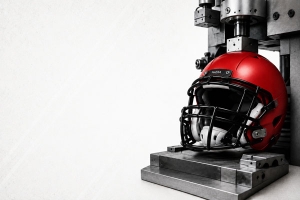
Reconditioning involves much more than cleaning a football helmet and applying a new finish. Equipment must be carefully inspected so that damage, wear, missing components, and other potential problems can be identified.
Depending on the equipment and its condition, the process may include disassembly, cleaning, inspection, replacement of worn or damaged components, refinishing, reassembly, testing, and documentation. Helmets eligible for recertification must also satisfy the requirements associated with the applicable NOCSAE standard before being returned as recertified equipment.
An accredited reconditioner follows an established process rather than treating reconditioning as a cosmetic service. The objective is to evaluate the equipment as a complete system and determine whether it is appropriate to return to service.
NAERA and NOCSAE Serve Different Roles
NAERA and NOCSAE are closely connected to football helmet reconditioning, but they are not the same organization and serve different purposes.
NOCSAE develops performance standards for athletic equipment. These standards establish testing requirements that certified equipment must meet.
NAERA focuses on the reconditioning industry and the companies performing that work. Its accreditation program helps establish professional requirements and practices for participating reconditioning facilities.
Understanding the distinction can be helpful when evaluating helmet reconditioning. NOCSAE addresses how equipment is expected to perform, while NAERA accreditation addresses the processes and qualifications of the facility performing the reconditioning work.
Why Accreditation Matters
Football helmets can remain in service for multiple seasons, which makes proper inspection and maintenance an important part of an equipment management program. Damage is not always obvious from a quick visual inspection, and components can wear differently depending on age, use, storage, and environmental conditions.
Working with an accredited reconditioner provides an established process for evaluating that equipment. It also gives schools and equipment managers a clearer understanding of how their helmets are being handled and what standards and procedures are being followed.
Accreditation does not eliminate the need for proper helmet fitting, routine inspection, maintenance, or responsible equipment management during the season. Instead, it is one part of a broader approach to maintaining football equipment throughout its usable life.