Inspect the Helmet Regularly
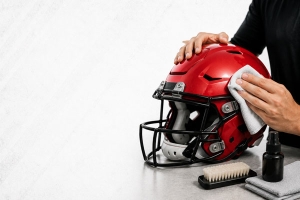 Helmet maintenance should begin with regular visual inspections. Before use, look over the shell, facemask, chin strap, hardware, padding, and other components for anything that appears damaged, loose, worn, or out of place.
Pay attention to cracks, unusual deformation, missing hardware, damaged facemask coatings, worn straps, loose attachments, or interior components that have shifted or deteriorated.
Players should also be encouraged to report anything that feels different. A change in fit, unusual movement, discomfort, or a component that suddenly feels loose may indicate a problem that deserves a closer look.
Keep the Helmet Clean
Sweat, dirt, grass, and other debris naturally accumulate during a football season. Regular cleaning helps keep the helmet more comfortable and makes it easier to inspect its components.
Follow the helmet manufacturer’s instructions when cleaning the shell and interior. In many cases, mild soap, water, and a soft cloth can be used for routine cleaning, but approved methods can vary depending on the helmet and its materials.
Avoid harsh chemicals, solvents, abrasive cleaners, or unapproved cleaning products. These products may damage helmet materials, finishes, labels, or components.
Consistent day-to-day care, combined with appropriate professional reconditioning, helps create a more complete approach to managing football equipment throughout its usable life.
Allow the Helmet to Dry Properly
After practices and games, helmets should be allowed to dry thoroughly. Leaving damp equipment sealed inside a gear bag or stored in an enclosed space can trap moisture and create an environment for odors and deterioration.
Whenever possible, remove the helmet from the equipment bag and allow it to air dry in a well-ventilated area. Avoid attempting to speed up the process with excessive heat.
Helmets should not be placed near heaters, inside hot vehicles for extended periods, or exposed to other high-temperature conditions that could potentially affect helmet materials or components.
Check Hardware and Components
A football helmet is made up of multiple components that work together as a system. Facemask attachments, chin straps, buckles, clips, jaw pads, interior padding, and other hardware should all be checked periodically.
Loose, damaged, missing, or excessively worn components should be addressed before the helmet is returned to use. Replacement parts should be appropriate for the specific helmet and installed according to manufacturer instructions.
Avoid making unauthorized modifications or substituting components simply because they appear to fit. Helmet parts and attachment systems can vary between manufacturers and models.
Don’t Ignore Changes in Fit
A helmet that fit properly at the beginning of the season may not fit exactly the same several months later. Players can grow, hairstyles can change, padding can settle, and adjustments can shift through regular use.
Periodically check that the helmet remains snug and properly positioned. The chin strap should remain correctly adjusted, and the helmet should not slide or rotate excessively on the player’s head.
If proper fit cannot be achieved using the helmet’s intended adjustment system, the helmet should be evaluated before it is used again.
Know When Professional Service Is Needed
Routine cleaning and inspection can be performed throughout the season, but they are not substitutes for professional reconditioning.
Reconditioning provides a more comprehensive evaluation of used equipment and may include cleaning, disassembly, inspection, replacement of worn components, refinishing, reassembly, and testing. When applicable, eligible helmets may also undergo the process required for recertification.
If a helmet has visible damage, questionable components, significant wear, or another condition that raises concerns about continued use, it should be removed from play until it can be properly evaluated.
Consistent day-to-day care, combined with appropriate professional reconditioning, helps create a more complete approach to managing football equipment throughout its usable life.